
Cooking with Laura Ayers • Kitchen tips & tricks
Stainless Steel Cookware: Tips, Tricks & a Little Kitchen Confidence
Beautiful browning without gluing dinner to the pan! 😂
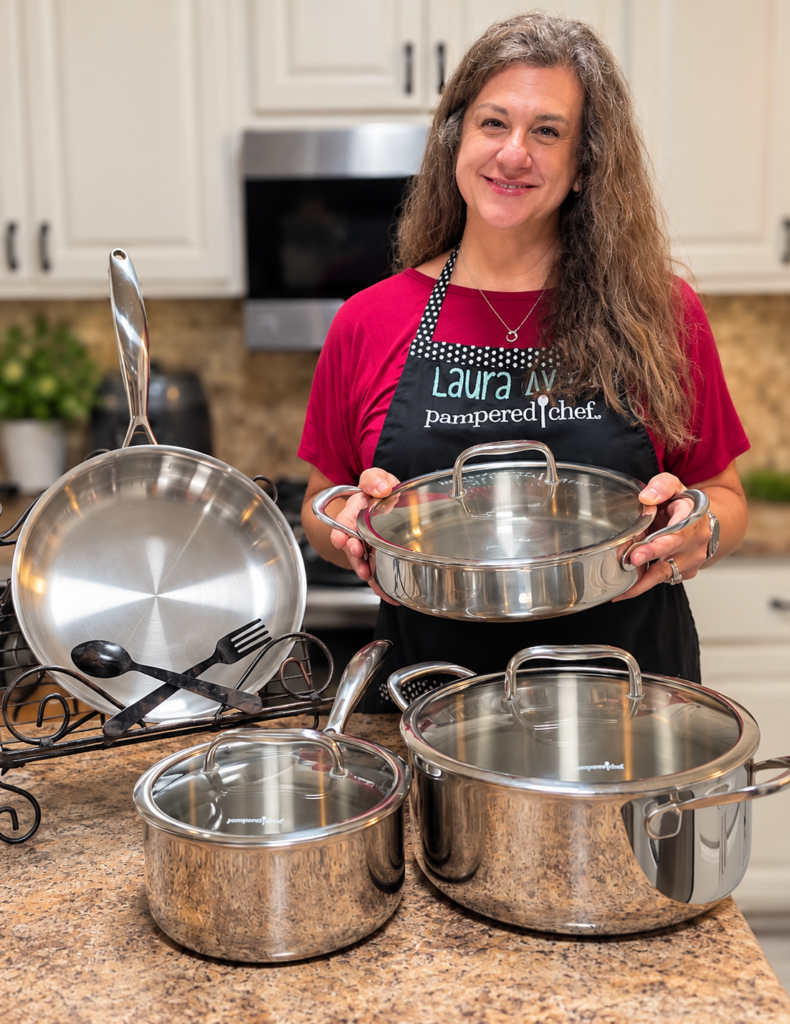
I’ll admit it: stainless steel cookware can be a little intimidating when you’re used to nonstick. You put a chicken breast in the skillet, try to flip it, and suddenly it seems like the chicken has decided to become a permanent part of the pan.
Sound familiar?
Here’s the thing: stainless steel isn’t difficult. It just plays by slightly different rules. Once you learn a few tricks, you can brown meat, simmer sauces, cook one-pan dinners, and put those little browned bits to delicious use.
And I love cookware that earns its cabinet space instead of just looking pretty in there. 💜
What’s So Great About Stainless Steel?
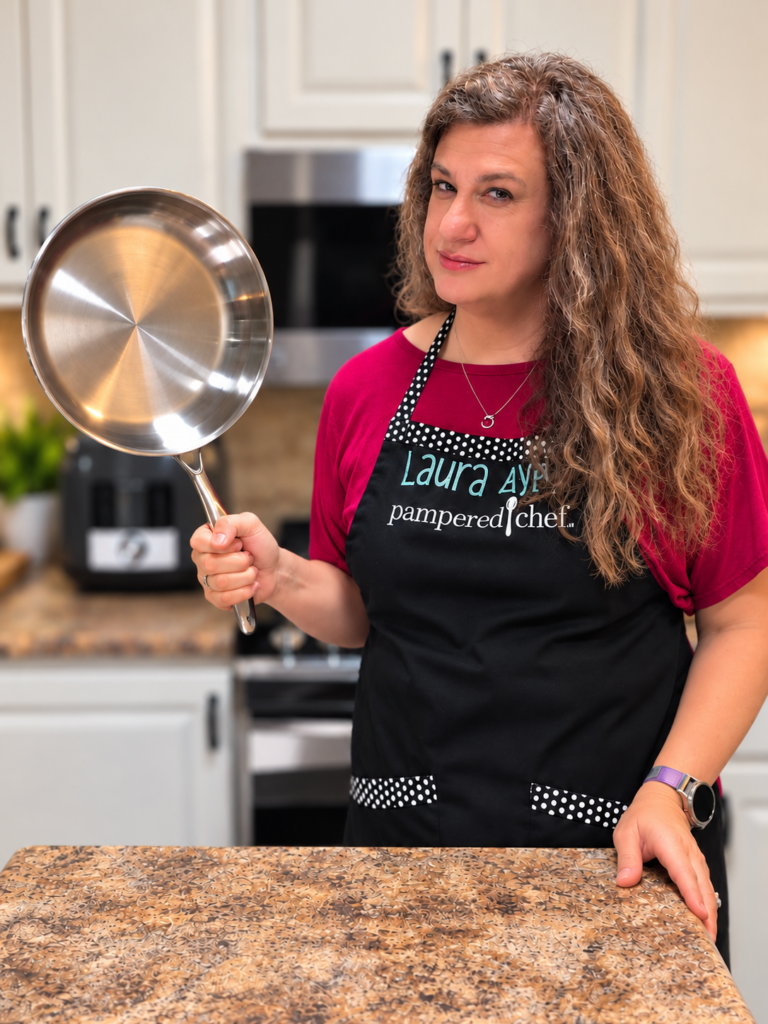
There are plenty of reasons to give it a spot in your kitchen. Pampered Chef’s stainless steel cookware has tri-ply construction to help distribute heat, a smooth interior without exposed rivets to clean around, and works on common cooktops, including induction.
Built for Real Cooking
Brown, sauté, simmer, and make a whole meal without switching to a different kind of pan every five minutes.
All About Flavor
That golden crust on your chicken? Those browned bits at the bottom of the skillet? That’s where the good stuff starts.
Made to Last
No traditional nonstick coating to wear away. With proper care, quality stainless steel can be a long-term kitchen workhorse.
Hot Pan, Happy Food! 🔥
One of the biggest adjustments when switching from nonstick is learning when your pan is ready. And no, turning the burner to HIGH isn’t the shortcut you think it is. 😂
Option 1: Preheat, Then Add Oil
Start with a clean, dry skillet over medium heat and give it a little time to warm up. Then add your cooking oil, let it heat until it shimmers, and add your food.
Think gentle waves in the oil—not smoke pouring off the pan.
Option 2: Try the Water-Drop Test
Before adding oil, place a few tiny drops of water in a preheated pan. When the drops gather into little beads that glide across the surface, the pan is hot enough for many searing jobs.
Let the water evaporate completely before adding oil. If the pan is smoking, turn down the heat and let it cool a bit.
Laura’s reminder: The water-drop test isn’t a requirement for every food. Eggs and delicate ingredients often do better with gentler heat. Learn your stove and your pan—there’s no trophy for the hottest burner!
Quit Poking Your Dinner! 😂
When you put chicken, steak, or pork chops into a properly heated skillet, resist the urge to immediately lift, flip, nudge, scoot, or otherwise interrogate them.
Give the food time to develop a crust. As it browns, it often releases more easily from the surface. If it feels firmly stuck, it may simply need another moment.
Give It Some Space
Crowding the skillet traps moisture and makes browning harder. Cook in batches when you need to.
Dry Food Browns Better
Pat meat dry before it hits the pan. Extra moisture encourages steaming instead of that beautiful golden sear.
Turn Down the Heat, Chef!
Stainless steel holds and transfers heat efficiently. For many everyday dishes, medium heat—or even medium-low—is plenty once the pan is warm.
If your oil is smoking, your food is burning before it cooks through, or everything is sticking aggressively, the heat may be too high. Turn it down. You are cooking dinner, not forging a sword. 😂
Remember: Match the heat to what you’re cooking. Searing a steak, gently scrambling eggs, and simmering a sauce are three different jobs.
Those Brown Bits Are GOLD! ✨
After cooking meat, you might see little brown bits stuck to the bottom of the skillet. Before you reach for the scrub brush, wait! Those tasty bits are called fond, and they’re a head start on a great pan sauce.
- Move the cooked meat to a plate and reduce the heat if needed.
- Add a splash of broth, wine, or water to the skillet. Keep your face back—hot liquid can steam and splatter.
- Gently scrape up the browned bits with a suitable utensil, then simmer the liquid into a quick sauce.
One important distinction: Brown is flavor. Black and burned? Not so much. If the bits are scorched and bitter, start fresh.
Keeping Your Stainless Steel Pretty
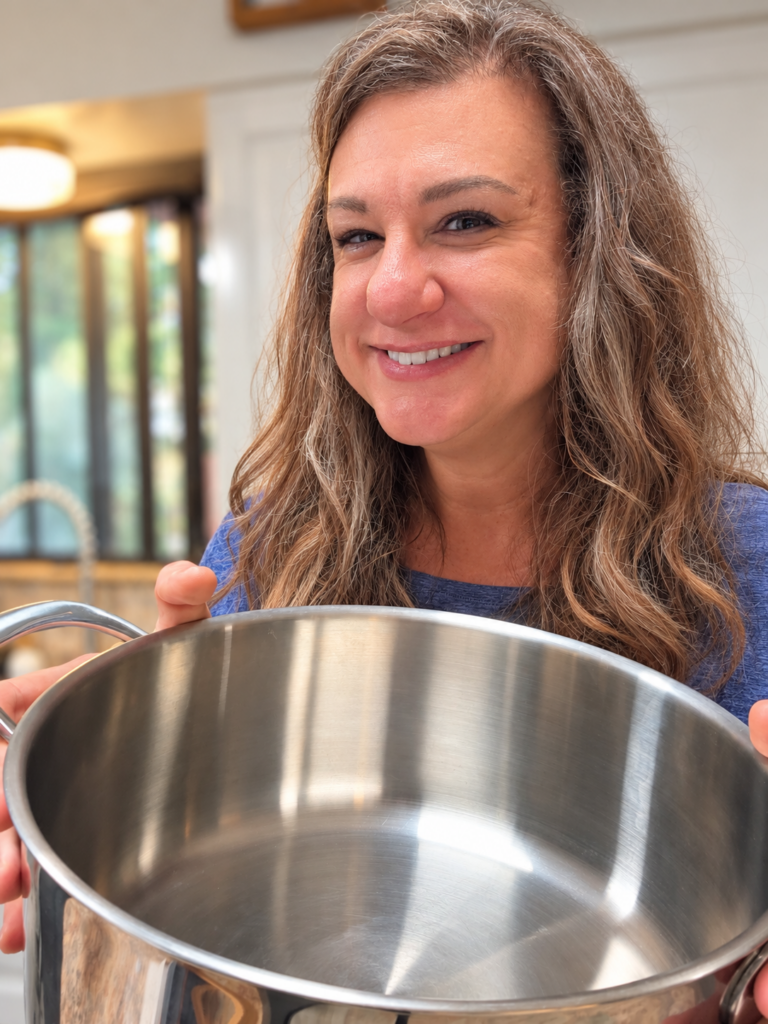
I like cookware that works hard, but I also like it to look nice. Is that too much to ask? 😂
What About Utensils?
Silicone, nylon, and wood or bamboo utensils are great everyday choices if you want to minimize surface scratches. Stainless steel can generally handle metal utensils too, but they may leave cosmetic marks. Check the care instructions for your particular piece.
Cleaning Without the Drama
Let a hot pan cool before washing—don’t shock it with cold water. Warm soapy water and a non-scratch sponge or brush handle most cleanup. For stubborn residue, soak briefly and wash again.
Cloudy Spots or Rainbow Colors?
Those marks can happen with stainless steel. A little diluted white vinegar can help with mineral deposits or discoloration. Rinse well and dry with a soft cloth.
Really Stuck-On Food?
Try simmering a little water in the pan to loosen the mess, then clean once it has cooled enough to handle. Use only cleaners and scrubbers approved for your cookware; avoid steel wool and harsh abrasives that can scratch the finish.
Cookware That Earns Its Cabinet Space
I’m a big believer in buying kitchen tools you’ll actually use. Good stainless steel can take you from sautéing vegetables and browning ground beef to simmering soup, boiling pasta, and making skillet dinners.
And when you’re watching your grocery and household budget, cookware that can do multiple jobs—and doesn’t need replacing every few years—makes a whole lot of sense.
You can build a collection piece by piece, choosing the sizes and shapes that fit the way you cook. No need to buy a whole kitchen’s worth of pans just because somebody says you should!
Ready to Put It to Work? 🍳
Reading about cookware is one thing. Seeing it in action is where the fun starts! I’ll be adding my own stainless steel cooking videos and recipes here so you can see how these tips work in a real kitchen—mess-ups and all.
Laura’s Stainless Steel Recipe Videos
- Blintzes — Recipe and cooking demonstration
- Dirty Cabbage — Recipe and cooking demonstration
- Eggs in Stainless Steel — Kitchen tips and video demonstration
More stainless steel recipes and videos coming soon!
One Last Thing… You Get Me, Too! 💜
If you’ve been avoiding stainless steel because you’re convinced everything will stick, start with something simple and give yourself a little practice.
And if you get stuck (hopefully just figuratively!), I’m happy to help you figure out what went wrong. That’s one of the perks of shopping with me: you get a real person who cooks, experiments, and occasionally has to scrub a pan, too.
Do you already cook with stainless steel, or is it still sitting on your kitchen wish list?
I’ll also be adding links to the individual Pampered Chef stainless steel pieces I recommend, so you can explore the options when you’re ready.